
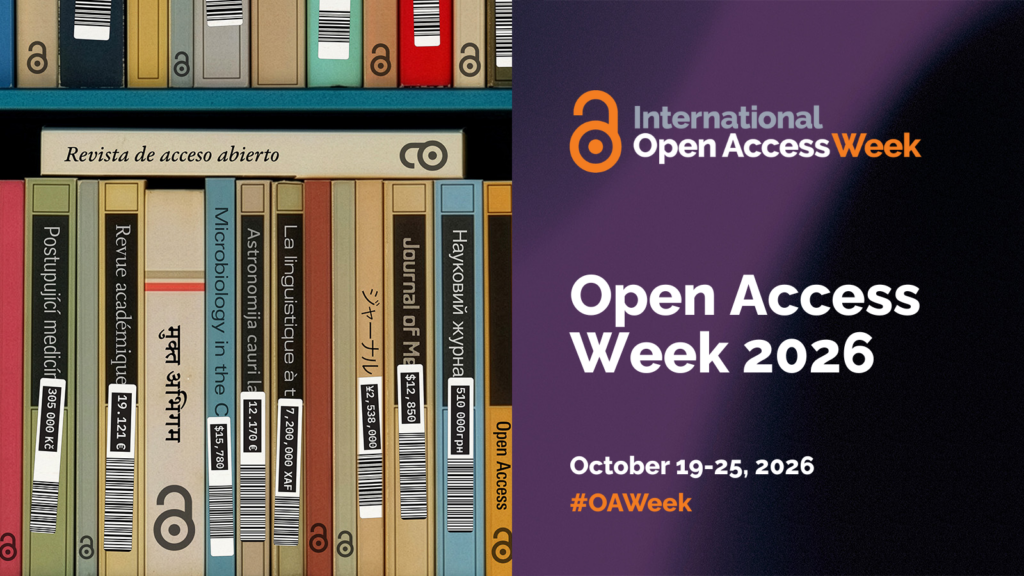
International Open Access Week will take place from October 19 to 25, 2026. The TU Hamburg University Library will once again participate with articles and events focused on open access to scientific knowledge.
This year’s theme is “The Cost of Knowledge.” It invites us to take a closer look: What does knowledge actually cost? Who bears these costs? And who can subsequently make use of the knowledge that is generated?
Knowledge Comes at a Price
When we talk about the costs of scientific knowledge, we might first think of journal subscriptions, publication fees, or publishing agreements. These financial issues play an important role for universities, libraries, and researchers.
But knowledge costs more than just money. It requires people to conduct research, write, review, communicate, and make knowledge accessible. It also requires infrastructure that must be developed, operated, and sustainably funded.
The motto “The Cost of Knowledge” therefore encourages us to look beyond just the visible costs. It’s also about the work that goes into it and how costs and benefits are distributed: Who invests time and resources? Who pays for scientific information and infrastructure? And who can subsequently use and reuse the knowledge that is generated?
Openness does not make these costs disappear. However, it changes the ways in which knowledge can be made accessible, shared, and built upon.
This raises not only the question of cost, but also another: What is open knowledge worth to us?
Current Highlights: Who Bears the Cost of Open Knowledge?
Various developments in scholarly publishing and in the handling of open knowledge demonstrate just how relevant these questions are today.
- Publication Costs and Information Budgets:
Universities and libraries are increasingly exploring ways to consider the costs of providing scholarly information and publishing together and to track these costs more transparently. The Hamburg University of Technology is also establishing an information budget to support this approach. Rather than focusing solely on individual publication fees, the university aims to gain a comprehensive overview of how it allocates resources to access scientific information, support publications, and maintain the necessary infrastructure. - Open scientific infrastructures:
Services such as OpenAlex make it possible to search for scholarly publications without an institutional database license and to reuse bibliographic data. However, even open infrastructures require funding, technical development, and ongoing maintenance. Who will shoulder this work in the long term, and how can research-driven services be supported collectively? - Artificial Intelligence and Open Knowledge:
The use of openly accessible content by AI systems also raises new questions. If academic and other freely available content contributes to the development of commercial applications, who then benefits from the work that went into creating that content? And what forms of recognition or reciprocity are conceivable in this context? These are among the questions addressed in the discussion surrounding CC Signals, developed by Creative Commons.
These examples show that the cost of knowledge is not just about the amount on a bill. It’s also about how work, funding, access, and benefits are interconnected.
Open Access Week 2026 at the Hamburg University of Technology
During Open Access Week, we’d like to explore the theme from different perspectives.
In our blog, we explore, among other things, what lies behind a list of academic search results. After all, literature research requires more than just time and search skills. Universities and libraries must also create, maintain, and fund metadata, databases, and research infrastructures. These infrastructures, in turn, shape which knowledge researchers can find and access.
Another article focuses on open educational resources (OER). Creating them requires time, creativity, and effort. However, open licenses allow others to reuse, adapt, and further develop these materials. In this way, work done once can have an impact beyond its original context.
The costs of scholarly publishing also play a role. At the Hamburg University of Technology, we support open-access publishing through various initiatives and ensure transparency regarding publication costs, including through OpenAPC.
Join us throughout the week and discover the work, decisions, and infrastructure that make open knowledge possible.
Discover, ask questions, and start a conversation
Open Access Week is also making its presence felt in the library. In our rotunda, we’re displaying posters about Open Access. You’ll also find a puzzle on the topic of openness waiting for you there. Whether you just want to put a few pieces together or take a longer break to work on the puzzle: Feel free to stop by and join in the fun!
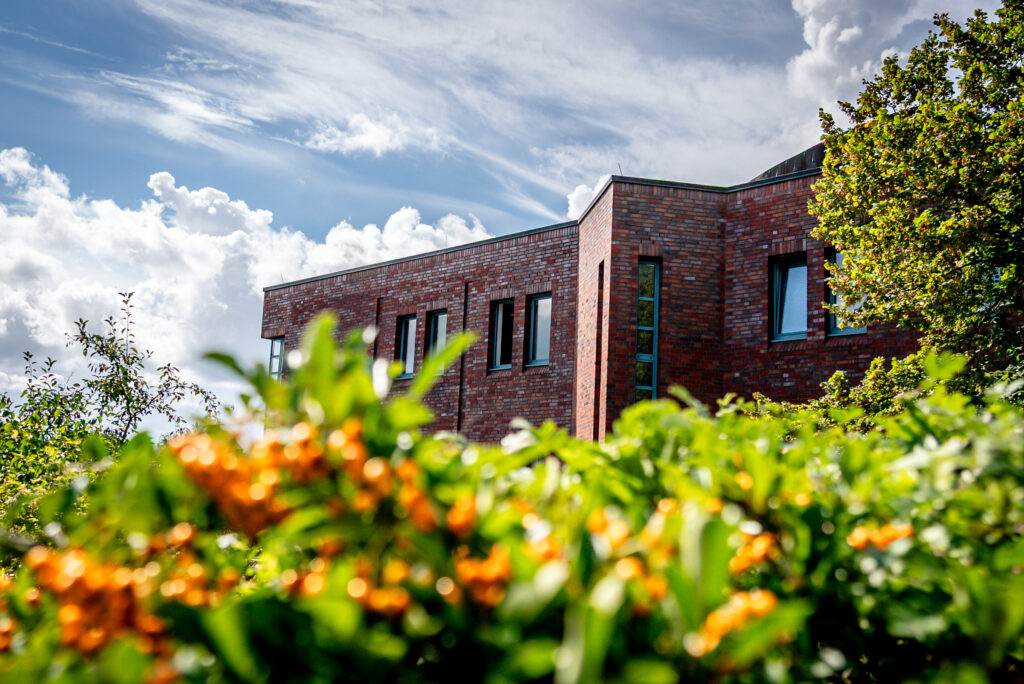
We also practice openness with our own materials whenever possible: On Wikimedia Commons, we now make photos of our library available under CC0. The photos show, among other things, the library building and our rotunda. They can be used, shared, and edited free of charge. And we plan to continue expanding the gallery.

Questions about Open Access are also welcome: Our open virtual Open Access consultation hour will take place on Friday, October 23, 2026, from 10:00 a.m. to 10:30 a.m.

Open Access Team of TUHH
E-mail: openaccess@tuhh.de
Consultation hours : every Friday from 10:00 am to 10:30 am
Join us via Zoom (identification code: 190591)
Whether it’s publication funding, publishing agreements, secondary publication, or Creative Commons licenses: The Open Access Team looks forward to answering your questions.
After all, the motto “The Cost of Knowledge” isn’t just about the question of what knowledge costs.
It’s also about how we manage the resources we invest in knowledge and how as many people as possible can benefit from it.
We will be happy to advise you on Open Access
You can reach the Open Access team via mail openaccess@tuhh.de.
Please also feel free to take part in our Open Access consultation hours via Zoom (identification code: 190591) if you have questions regarding Open Access (every Friday from 10:00 am to 10:30 am).

Frauke Wienert
Team Open Access
openaccess@tuhh.de
+49 40 30601 2472

Florian Hagen
Team Open Access
openaccess@tuhh.de
+49 40 30601 3003

Beate Rajski
TUHH Open Access Commissioner
openaccess@tuhh.de
+49 40 30601 3004
Our contributions to Open Access Week 2026
